
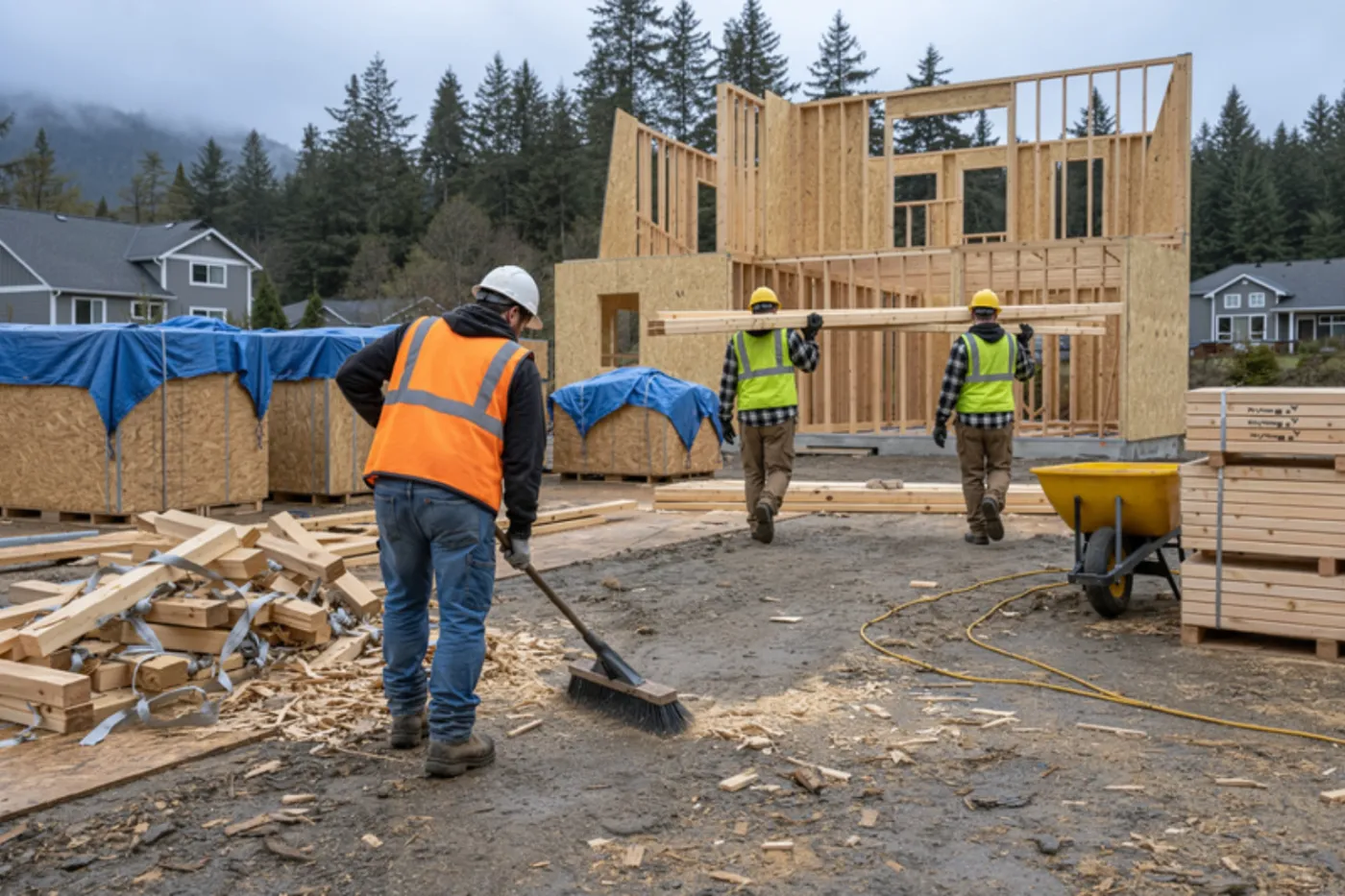
Stage one: keeping the site tidy while you build
On a busy site, trades lose time stepping around offcuts and hunting for materials. A cleanup labourer keeps the site working, so your carpenters, drywallers and electricians can stay on their own jobs. On a house build in Surrey or a renovation in Langley, the daily list usually looks like this:
- Sweeping floors and clearing walkways
- Picking up offcuts, packaging and fasteners
- Stacking and moving materials where the trades need them
- Carrying debris to the bin and keeping the bin area tidy
- An end-of-day cleanup so the next morning starts clean
See construction labour supply for the kind of help our labourers give builders.
Stage two: clearing debris after demolition or framing
Demolition and the early stages of a renovation produce the heaviest debris. Labourers can break it down, bag it, separate clean wood and metal where your site sorts materials, and load it, but the bin or truck still has to take it away. Plan the hauling at the same time as the labour, so the debris never sits on site for long.
In older buildings, materials that might contain asbestos need testing and, where required, removal by qualified specialists before general labourers handle them. Tell us what has been tested and cleared when you book.
Stage three: the final clean before handover
Construction dust settles on every surface: window tracks, cabinet interiors, light fixtures and floors. A final construction clean is detailed cleaning work, done with the right equipment once the trades have finished. Labourers can do the rough clean first, such as removing floor protection, taking out the last debris and sweeping, so the cleaners start on an empty, swept space.
Booking the right amount of help
Cleanup needs change as a project moves along. A common pattern is one labourer most days during framing, a bigger crew for a demolition weekend, and a short booking for the rough clean at the end. Tell us the stages and the dates when you request workers, and the crew size can be planned around them.
Construction schedules slip, and that is normal. If your dates move, call or text as early as you can, so the crew can be moved to the new dates instead of arriving at a site that is not ready.
Working on your site
Crews follow your site rules, your supervisor and your safety orientation. Tell us the start time, where to park, which safety gear your site requires, and who the crew reports to on the first morning. Crew size, rates and start times are confirmed with you before the first shift.
Questions people ask
01Can labourers work alongside my trades?
Yes. They take direction from your site supervisor and keep work areas clear, so your trades can keep working.
02Do labourers handle drywall and insulation waste?
They can bag and carry ordinary construction debris. Anything that may contain asbestos or other hazardous materials must be tested and dealt with by qualified specialists first.
03Can I book a crew just for the end of the job?
Yes. Short bookings can often be arranged for a final rough clean before the cleaners arrive. The minimum is confirmed before the first shift.
 Guide
 Guide